Early life and beginnings
Tsukioka Yoshitoshi (大蘇 芳年), born Owariya Yonejirō on April 30, 1839 in Edo (today’s Tokyo), came from a merchant family that had recently bought samurai status. He showed early artistic talent and — after a difficult childhood and family changes — was taken in by an uncle who encouraged his drawing. Yoshitoshi’s upbringing in Edo placed him at the heart of the late-Tokugawa visual culture that would shape his work.
Training and mentors
At age eleven Yoshitoshi was apprenticed to Utagawa Kuniyoshi, one of the great Utagawa-school masters. Kuniyoshi gave him the art-name “Yoshitoshi” and exposed the boy to a wide range of sources — from kabuki sketches to foreign prints and European engravings — training that honed Yoshitoshi’s draftsmanship and sense of dramatic narrative. In his early career he also worked alongside other Utagawa school artists and contributed to collaborative series under senior masters’ auspices. These formative years produced the technical skill and theatrical eye that would mark his mature prints.
Style and subjects: ghosts, warriors, and moonlight
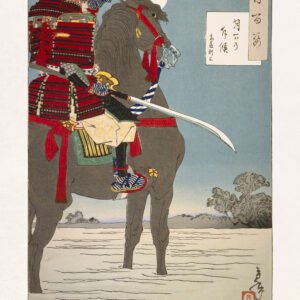
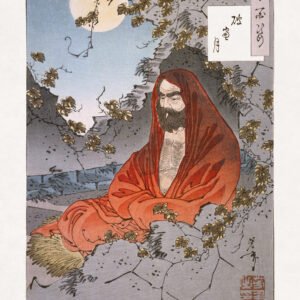
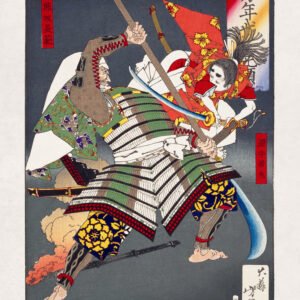
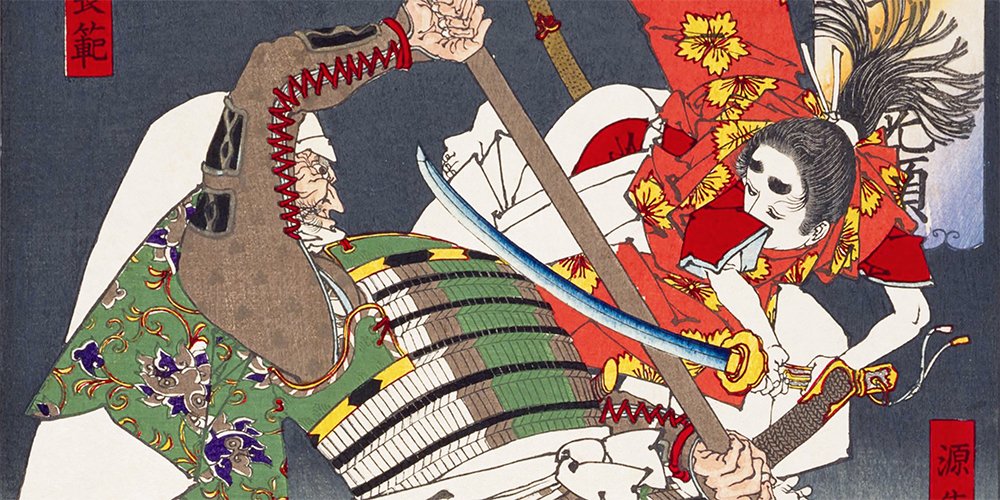
Yoshitoshi’s output is notable for its range and emotional intensity. He worked in the classic ukiyo-e idiom — actor prints, historical scenes, and bijin-ga (beautiful women) — but is best remembered for two interlocking talents: a flair for dramatic, often violent narrative (warriors, executions, strange crimes) and a late-career turn toward poetic, melancholic imagery (ghosts, legends, moonlit scenes). Technically, he pushed color woodblock printing to expressive extremes even as photography and lithography were replacing traditional methods in Meiji Japan.
Major works and publications
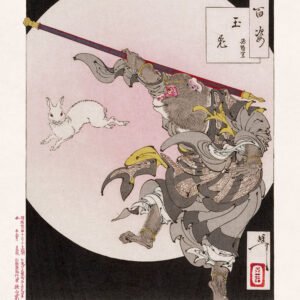
Yoshitoshi’s most famous late series is Tsuki hyakushi (One Hundred Aspects of the Moon), produced and sold in installments between 1885 and 1892 by publisher Akiyama Buemon. Each print links a moonlit motif to figures from history, literature, Noh and kabuki, or folklore — the series is both a poetic exercise and a commercial triumph that drew eager crowds at release. He also created striking supernatural cycles such as his New Forms of Thirty-Six Ghosts, as well as many single prints that circulated in newspapers, books, and publisher portfolios of the period.
Legacy and late years
Yoshitoshi worked through the turbulent shift from the Edo to the Meiji era — a time when Japan was modernizing rapidly and traditional print culture was under threat. Widely regarded as the last great master of ukiyo-e, his late masterpieces elevated the medium’s narrative and psychological possibilities just before the commercial decline of multicolor woodblock printing. His dramatic framing, bold composition, and clear visual storytelling gave his works an immediacy that still resonates today, often feeling like manga panels come to life. While no major mangaka has publicly named him as an influence, institutions such as the Art Gallery of New South Wales acknowledge his role as an “originator of manga and anime” and his impact is unmistakable in horror manga, ukiyo-e revivals, and the broader visual narrative traditions that followed. Yoshitoshi died in 1892, leaving behind a body of work whose reputation has only grown among collectors, historians, and artists worldwide.
If you love dramatic storytelling, haunting folklore, and exquisite printmaking, Yoshitoshi’s work is a brilliant place to start. Find below a curated selection of Tsukioka Yoshitoshi prints to decorate your home.
-
 Add to WishlistAdd to Wishlist